

Everything is Romantic
On Johann Wolfgang von Goethe's "The Sorrows of Young Werther" (translated by Burton Pike)

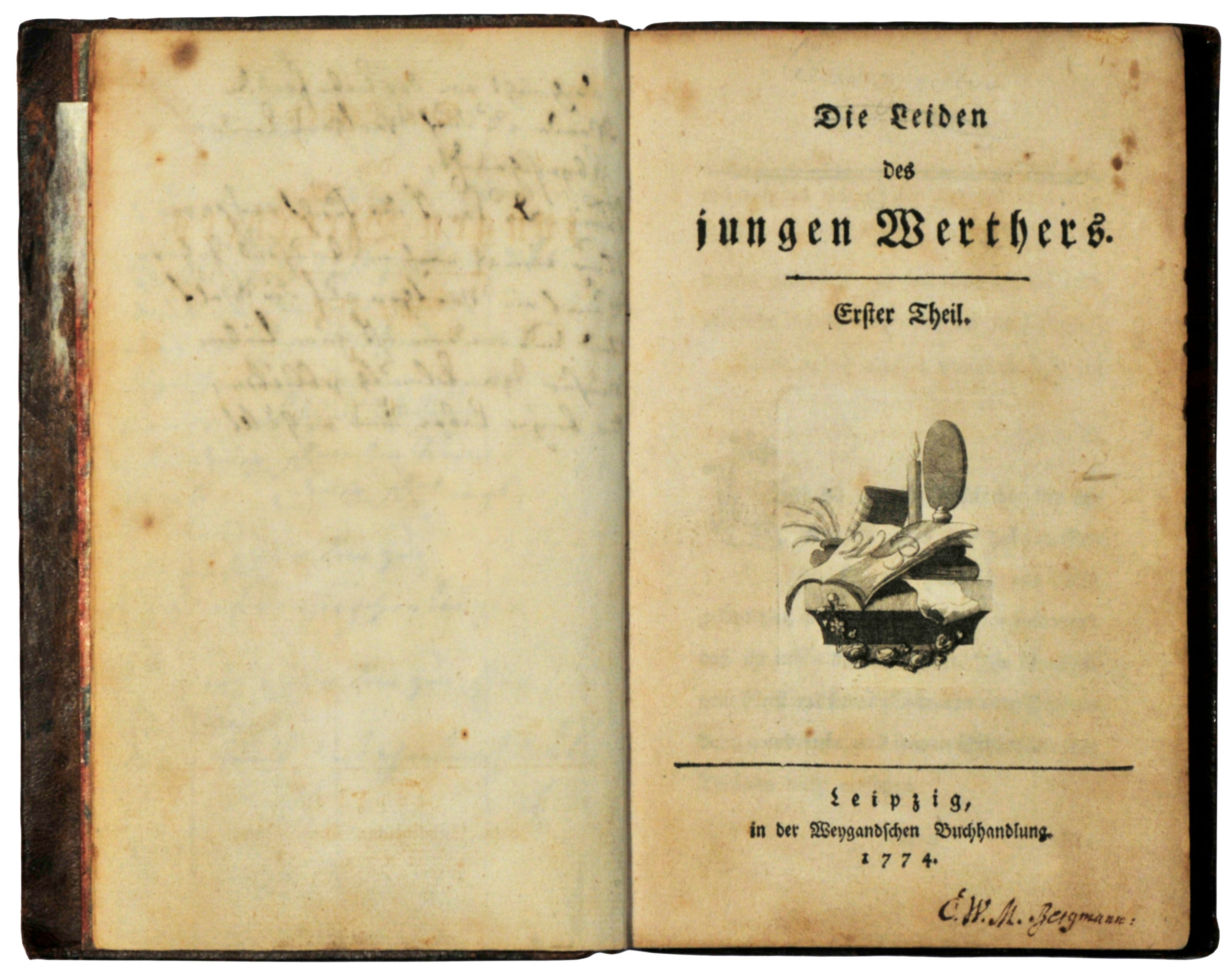
It’s funny to come to a classic text not only through the layers of time — Goethe’s Sorrows of Young Werther was released, anonymously, in 1774 — but also through layers of interpretation. I read Roland Barthes’ A Lover’s Discourse (an exegesis of Goethe’s text, among other things) back in college, and still refer to it now, and so the Barthesian reading sticks in the head, so I’m reading Goethe through Barthes through Goethe. Plus there’s all the historical detritus you pick up in the meantime;I know this is the book that inspired all those copycat suicides (biographers dispute this claim, but the book and Werther’s distinctive attire were banned in cities across Europe) and also that it was among Napoleon’s favorite novels. The general carried it with him on his Egyptian campaign, read it repeatedly, and was apparently starstruck upon meeting Goethe, pressing him for details on the novel even a quarter century after its publication. Frankenstein’s monster reads the novel in Shelley’s original, the creature of the Enlightenment looking back at a (the?) figure of Romanticism and finding something of a kindred spirit. Barthes, Napoleon, and Frankenstein’s monster walk into a bar and I’m sitting there reading Werther; what am I supposed to even do with the actual text itself, a document of uncut earnest feeling overflowing its bounds.
