

Useless Wisdom So Dearly Won
On Samuel Beckett's "Watt"

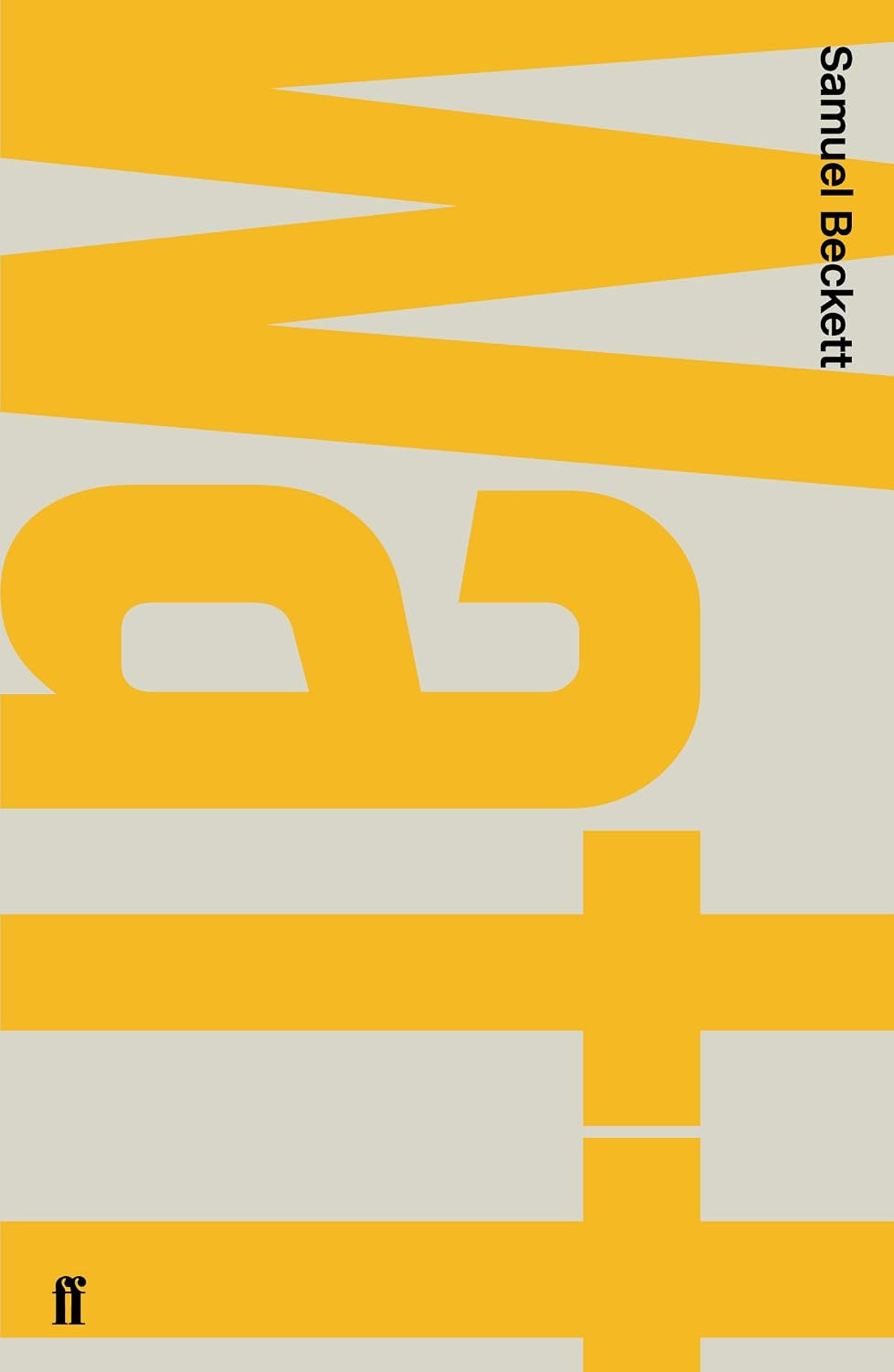
“What is it that this Dublin air does to these writers?” one befuddled publisher wrote while rejecting the manuscript of Samuel Beckett’s Watt, and you have to say this man wasn’t wrong; Watt has all the hallmarks of true Irish literature, in that it is totally inimical to the reader. James Joyce, Flann O’Brien, Beckett, Anna Burns, Eimar McBride, among many more: these Hibernians make you work for it. If you’ve got the gift of the gab, you can’t just give it away; all that euphonic prose has to be locked away behind some game or concealment. Silence, cunning, exile, as Joyce wrote in Portrait of the Artist as a Young Man, emphasis on that middle trait. In Watt, Beckett picks up Joyce’s baton and takes difficulty to its logical extremes, or takes logic to its difficult extremes, and strings the novel along with him, creating an exhausting and exhaustive text. In C.J. Ackerley’s introduction to the 2009 ‘corrected’ version of Watt, he writes of the problem of even trying to make a ‘standard’ version of Watt: “The problem of error is crucial, for as Watt interrogates the foundations of rational inquiry, the distinctions between intended errors, authorial errors, mistakes introduced by publishers, changes of intention and other obnubilations loom all the larger. If no distinction can be drawn between deliberate error and inadvertent error then all interpretation is fraught.” Watt, with its pervasive and ever-unfolding errors, is like one of those math problems where something goes wrong early on in the process and then ends up further and further from the answer even though the operations are technically correct, so many left turns on a road to the wrong place. (Just plug in those logic problems with symbols in them for the math.) Watt is permutational work, proceeding down every possible wrong combination in order to find nothing in the end. But even after having my eyes repeatedly poked by this book, I still came away with something of a perverse attachment to the novel; what can I say, I’m a sucker for punishment.
Watt is one of Beckett’s earlier novels, written in his resistance days while on the run from the Gestapo, killing time between Paris and country safehouses. Beckett called it an “exercise,” and it does have that air to it, filled with cascading combinations and catalogs, lists on lists, all excruciatingly drawn out. It is the literary equivalent of the Simpsons rake joke, with philosophical conceptions of knowledge standing in place of the continually stepped-on rakes; even the most frustrating passages (the story of a Trinity College examination on the subject of cube roots in particular) eventually come around to being funny for how absurdly they’ve been stretched out. Trying to know anything for sure in Watt is a fraught enterprise, broken down into Zeno-like increments that stretch the most basic of assumptions into Herculean undertakings. Our befuddled querent is Watt, “who had not seen a symbol, nor executed an interpretation, since the age of fourteen, or fifteen, and who had lived, miserably it is true, among face values all his adult life, face values at least for him.” Watt is is sent (by whom?) south of Dublin to work in the house of one Mr.Knott (who is?). Mr. Knott seems to always have two servants, one upstairs, one downstairs; when someone new arrives, the longer tenured of the two servants leaves, the downstairs servant moves up, and the cycle begins again, though for how long nobody really knows, your time is up when your time is up. When is that?
